In Depth Guide to Benefits of HVAC Maintenance for Moisture Damage

Why the Benefits of Regular HVAC Maintenance in Wet Climates Matter More Than You Think
The benefits of regular HVAC maintenance in wet climates are significant — and if you live in Kitsap or Jefferson County, Washington, they apply directly to your home. The Pacific Northwest is one of the dampest regions in the country. That persistent moisture doesn't just affect the outdoors. It works its way into your home and puts serious strain on your HVAC system year-round.
Here's a quick look at what regular maintenance actually does for homeowners in wet climates:
- Prevents mold and mildew growth by keeping moisture from building up inside your system
- Improves indoor air quality by keeping coils, filters, and drain lines clean
- Reduces energy bills by keeping your system running efficiently — properly maintained systems can be 15-20% more efficient
- Extends equipment lifespan by protecting vulnerable components from rust and corrosion
- Prevents water damage to your home's structure, ceilings, and crawl spaces
- Lowers breakdown risk — systems that receive biannual maintenance are far less likely to fail during peak humidity seasons
- Controls indoor humidity levels, reducing the risk of structural damage and health issues from excess moisture
Neglected HVAC systems in humid regions can raise indoor humidity levels by as much as 30%. That's not just uncomfortable — it can lead to mold, wood rot, and expensive repairs that go well beyond your HVAC system itself.
The good news is that consistent, routine maintenance addresses most of these risks before they become real problems. The sections below break down exactly how.

Benefits of regular hvac maintenance in wet climates glossary:
- annual hvac maintenance is it worth it
- how often should you service your hvac system
- what does an hvac maintenance visit include
Key Benefits of Regular HVAC Maintenance in Wet Climates
Living in Western Washington means embracing the rain, the mist, and the gorgeous green landscapes. However, our beautiful, damp climate presents unique challenges for home comfort systems. When moisture levels are constantly high, your heating and cooling equipment has to work double-time. It isn't just regulating temperature; it is actively managing latent heat and extracting pints of water from the air every single hour.
One of the most critical benefits of regular HVAC maintenance in wet climates is preventing your system from becoming a breeding ground for mold and mildew. Because your air conditioner or heat pump cools the air, moisture naturally condenses on the cold surfaces inside the unit. If dirt, dust, and organic debris are allowed to settle on these damp surfaces, mold can begin to grow in as little as 24 to 48 hours.
Regular professional maintenance can reduce the likelihood of mold growth by up to 50% in humid climates. When our experienced technicians clean and sanitize your system, we remove the organic food sources that mold spores need to survive. To understand how your system keeps things dry, check out our guide on How Your HVAC System Prevents Mold in Wet Climates.
Additionally, keeping these systems clean is central to maintaining healthy indoor air quality. When mold or bacteria take hold inside your air handler, the system acts like a giant fan, spreading these microscopic irritants to every room in your home. This can trigger allergies, asthma, and respiratory issues. Routine maintenance acts as a shield, ensuring your home remains a safe, clean sanctuary. For more details on how we prevent these issues, read about How Proper HVAC Maintenance Prevents Mold Growth. For external guidelines on maintaining a dry home, you can also consult the EPA Guide to Mold and Moisture.
Vulnerable Components and Critical Drainage Tasks
An HVAC system is a complex network of electrical, mechanical, and structural parts. When exposed to constant humidity, certain components are much more vulnerable to moisture damage than others.
During a standard tune-up, our team pays close attention to these high-risk areas:
- Evaporator Coils: These coils are responsible for absorbing heat from your indoor air. As they cool, moisture condenses on them. If the coils are dirty, the water cannot run off properly, leading to ice buildup, reduced airflow, and biological growth.
- Condensate Drain Lines and Drain Pans: This is the plumbing system of your HVAC unit. It collects the condensed water and channels it safely outside your home. In wet climates, algae and slime can quickly clog these narrow lines.
- Electrical Connections: High humidity can cause electrical contacts to corrode, leading to short circuits, system failures, or even fire hazards.
- Fan Blades and Motors: Excess moisture combined with dust can weigh down fan blades, putting extra strain on the motor and causing premature wear.
To keep these parts running smoothly, we perform essential drainage tasks during every visit. We flush the condensate drain line with specialized clearing agents, check the drain pan for cracks, and ensure the condensate pump is operating perfectly. If you are curious about what else we do during these visits, you can read more about What Does an HVAC Maintenance Visit Include.
Understanding the relationship between your indoor and outdoor equipment is also key to preventing moisture issues. Learn more about this by reading How Your Indoor and Outdoor AC Units Work Together.
Vulnerable HVAC Components and Moisture Risks
| Component | Primary Moisture Risk | Maintenance Solution |
|---|---|---|
| Evaporator Coils | Mold growth, dust accumulation, ice buildup | Deep chemical cleaning and airflow optimization |
| Condensate Drain Line | Algae blockages, water backup, mold | High-pressure flushing and biocide treatment |
| Electrical Contacts | Corrosion, pitting, loose connections | Inspection, tightening, and anti-corrosive treatment |
| Blower Motor | Rust, winding degradation, electrical shorts | Cleaning, lubrication, and amp-draw testing |
How Moisture Impacts System Efficiency and Lifespan
When your HVAC system is struggling against high humidity, it doesn't just feel less comfortable; it costs you more money. In wet climates, your air conditioner or heat pump must work harder to remove moisture before it can effectively lower the air temperature. This is known as managing the "latent heat load."
If your system's coils are coated in dirt or its airflow is restricted, this heat exchange process becomes highly inefficient. Proper maintenance can improve HVAC efficiency by 15-20%. In our damp Pacific Northwest climate, where systems must run for extended periods just to dehumidify the air, that efficiency boost translates directly into lower monthly utility bills.
Furthermore, running a system that is choked by moisture and dirt puts immense strain on the compressor—the heart of your heating and cooling setup. Overworking the compressor leads to overheating, high wear and tear, and eventually, a premature system replacement. By scheduling regular checkups, you ensure your system operates at peak performance, extending its overall lifespan by several years.
To keep your system running in top shape, check out our guide on How to Maintain Your Heating and Cooling System. If you rely on a heat pump for year-round comfort, it helps to understand its mechanics; learn more in our article How Does a Heat Pump Work. For commercial design principles and advanced humidity management, you can refer to the ASHRAE Humidity Control Design Guide.
Recognizing the Signs of Moisture-Related HVAC Issues
How do you know if your heating and cooling system is losing the battle against our humid climate? Your home will usually drop several hints. Recognizing these signs early can save you from costly repairs and protect your family's health.
- Musty Odors: If you notice a damp, earthy, or musty smell when your heating or cooling kicks on, mold is likely growing inside your ductwork or on your evaporator coils.
- High Indoor Humidity: If your skin feels clammy, your bedding feels slightly damp, or your home feels stuffy even when the temperature is set correctly, your system isn't dehumidifying properly.
- Window Condensation: Frequent fogging or water droplets running down the inside of your windows is a clear sign that your indoor humidity levels are too high.
- Pooling Water: Finding water around your indoor air handler or furnace is an immediate red flag that your condensate drain pan has overflowed or cracked.
- Frequent Short-Cycling: If your system turns on and off rapidly without completing a full cycle, it may be struggling with frozen coils or restricted airflow caused by moisture buildup.
Our coastal climate makes our homes highly susceptible to these issues. To understand how moisture behaves in local properties, read about How Moisture from a Hidden Leak Contributes to Mold in PNW Homes. Additionally, our seasonal weather patterns can put sudden pressure on your home systems; learn more in our article on How Pacific Northwest Storms Affect Your HVAC System.
Recommended Service Frequency for Humid Regions
In dry, arid regions, homeowners can sometimes get away with skipping an annual HVAC service. In wet climates like the Kitsap Peninsula, however, neglecting your system is a recipe for trouble.
Because of our high rainfall and persistent humidity, we highly recommend biannual maintenance—once in the spring to prepare your cooling system, and once in the autumn to ready your heating system. HVAC systems in wet climates that receive biannual maintenance are 95% less likely to experience emergency breakdowns during peak humidity seasons.
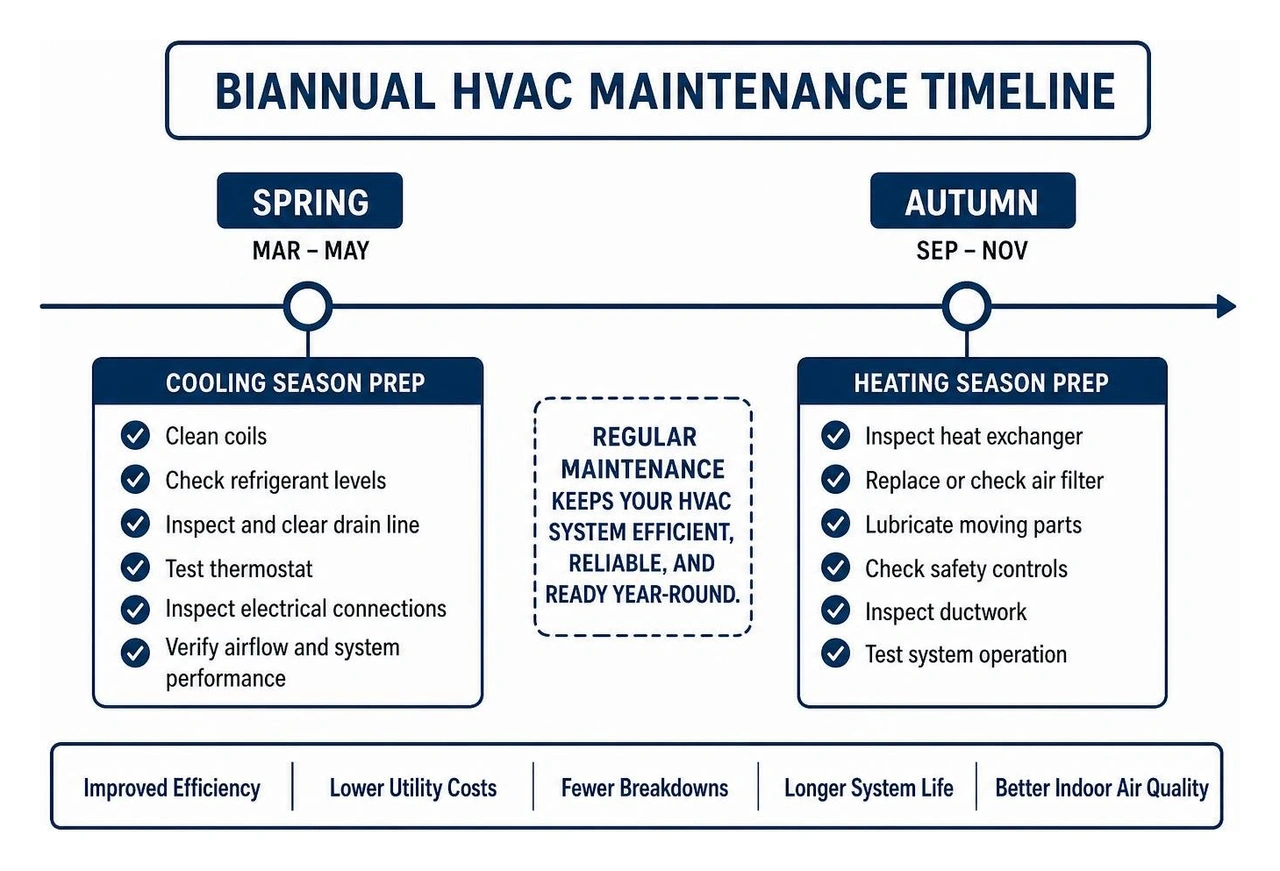
Biannual visits ensure that any moisture-related issues, such as minor rust, small clogs, or electrical corrosion, are caught and resolved before they turn into major system failures. For a deeper dive into scheduling, check out our comprehensive guide on How Often Should You Service Your HVAC System.
Our local climate is unique, and it shapes how we care for our homes. You can learn more about this by reading How Kitsap Peninsula Climate Affects Your Home Systems or by checking out our How Often HVAC Service Complete Guide.
How the Benefits of Regular HVAC Maintenance in Wet Climates Protect Your Home's Structure
Your HVAC system does more than just keep you warm or cool; it acts as a primary defense system for your entire home. Excess indoor humidity doesn't stay confined to the air. It settles on drywall, penetrates wooden beams, and seeps into crawl spaces. Over time, this constant moisture can cause wood rot, peeling paint, warped flooring, and compromised structural integrity.
By maintaining proper indoor humidity levels (ideally between 30% and 50%), a well-maintained HVAC system prevents water from condensing on structural elements. This is especially crucial in crawl spaces and attics, where poor ventilation combined with damp air can lead to massive mold infestations and weakened floor joists. Regular maintenance ensures your system is always capable of extracting this destructive moisture.
Long-Term Financial Benefits of Regular HVAC Maintenance in Wet Climates
Investing in regular maintenance pays off over time. When you consider the financial impact of moisture damage, the savings become clear:
- Fewer Emergency Repairs: Catching a clogged drain line or corroded wire early prevents sudden system shutdowns when you need your system most.
- Lower Energy Bills: A clean, optimized system consumes significantly less electricity to keep your home comfortable and dry.
- Preventing Water Damage Claims: Regular coil cleaning and drain line maintenance can prevent up to 80% of water damage claims related to HVAC systems in wet climates. A single overflowing drain pan can ruin ceilings, walls, and flooring, resulting in expensive remediation.
- Protecting Your Warranty: Most major HVAC manufacturers require proof of regular professional maintenance to keep your equipment warranty valid.
To learn more about the long-term value of routine care, read our article: Annual HVAC Maintenance Is It Worth It.
Frequently Asked Questions about Wet Climate HVAC Care
How does humidity affect HVAC efficiency?
High humidity increases the "latent heat load" on your system. This means your air conditioner or heat pump must spend extra energy condensing water vapor out of the air before it can effectively lower the indoor temperature. This extra work increases system run times and raises your energy consumption.
Can a clogged condensate line cause water damage?
Yes, absolutely. When algae, dust, or mold clogs your condensate drain line, the water extracted from your indoor air has nowhere to go. It will back up, overflow the drain pan, and spill into your home. This can lead to ruined ceilings, moldy drywall, damaged flooring, and costly structural repairs.
What is the best way to prevent mold in ductwork?
The most effective way to prevent mold in your ductwork is to control your home's overall humidity levels, replace your air filters regularly, and schedule professional coil cleanings. Keeping your system's components clean prevents dirt from acting as a food source for mold spores.
Conclusion
Protecting your home from the damp Pacific Northwest climate requires a proactive approach. The benefits of regular HVAC maintenance in wet climates are clear: it prevents mold, lowers utility bills, protects your home's structure, and ensures your family enjoys clean, healthy indoor air year-round.
At Eagle Pipe Mechanical, we are proud to be a trusted HVAC and plumbing contractor serving Kitsap and Jefferson Counties, WA. As a 100% women-owned and operated business with decades of experience, we pride ourselves on delivering honest, efficient, and friendly service to our neighbors in Poulsbo, Kingston, Hansville, Belfair, Indianola, Bainbridge Island, Silverdale, Port Ludlow, Port Townsend, Port Hadlock, Port Orchard, Bremerton, Gig Harbor, Seabeck, and Suquamish.
To make home maintenance easy and stress-free, we offer our Eagle's Nest maintenance plan. This comprehensive plan includes thorough 37-point inspections, extended warranties, priority customer status, and repair discounts to keep your home comfortable and dry in any weather.
Ready to protect your home from moisture damage? Contact us today to schedule your service or learn more about our Eagle Pipe Mechanical HVAC Services.
CUSTOMER TESTIMONIALS
Our customers’ experiences say more than we ever could. See how Eagle Pipe Heating & Air has earned trust across the Pacific Northwest with reliable service and lasting results.