How to Improve Your HVAC Maintenance on the Kitsap Peninsula in 7 Days

Why Every Kitsap Homeowner Needs a Solid HVAC Maintenance Plan
The best HVAC maintenance tips for the Kitsap Peninsula start with understanding one simple truth: this region is harder on home comfort systems than almost anywhere else in the country.
Here is a quick overview of the most important steps:
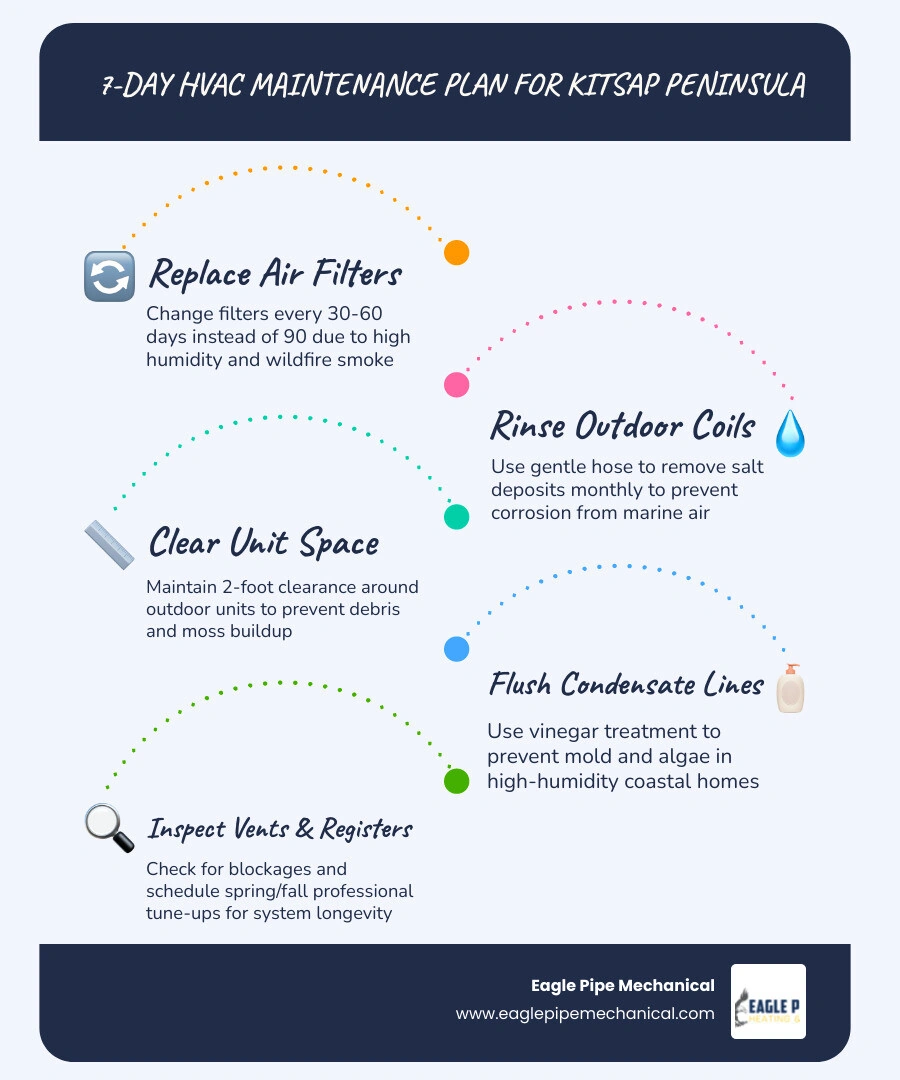
- Replace air filters every 30-60 days — not the standard 90 days recommended for dry climates
- Rinse outdoor coils monthly with a gentle garden hose to remove salt deposits
- Keep at least two feet of clearance around outdoor units to prevent debris buildup
- Flush condensate drain lines with white vinegar to prevent algae and mold
- Schedule professional tune-ups twice a year — spring and fall — especially for heat pumps
- Check indoor vents and registers for obstructions that reduce airflow
- Watch for warning signs like musty odors, ice buildup, or short-cycling
Living on the Kitsap Peninsula means your HVAC system faces 40 to 50 inches of rain each year, persistent coastal humidity that regularly tops 75% from October through May, and salt air drifting inland from Puget Sound. That combination creates conditions that can cut an outdoor unit's efficiency in half if coils are left unattended. It can also shorten the lifespan of a system that, with proper care, could run efficiently for 15 to 20 years.
Most national maintenance guidelines were written for drier climates. They do not account for the galvanic corrosion that salt air causes on aluminum fins and copper tubing, the mold pressure that builds inside ductwork when indoor humidity climbs, or the extra wear heat pumps experience when they run year-round in a marine climate. Following generic advice here is a bit like using a rain jacket designed for Seattle and expecting it to hold up in a Kitsap winter — it will fall short.
The good news is that a focused, seven-day action plan can get your system back on track, and ongoing habits can protect it for years to come.
Basic hvac maintenance tips for the kitsap peninsula terms:
Why the Marine Climate Demands Specialized Care
The breathtaking views of the Puget Sound come with a invisible cost for your home comfort systems. Our unique Pacific Northwest environment falls under the oceanic temperate climate classification, which means we experience mild, wet winters and cool, dry summers. However, the air is almost constantly saturated with moisture.
For your heating and cooling equipment, this dampness is a relentless adversary. High humidity and salt-laden air don't just sit on your outdoor unit; they actively degrade it. Over time, moisture and airborne salts cause galvanic corrosion, which is the electrochemical reaction that occurs when different metals—such as the copper tubing and aluminum fins in your outdoor unit—come into contact in a wet environment.
Without proactive HVAC Preventive Maintenance, this corrosion creates micro-cracks, leading to refrigerant leaks, electrical failures, and structural decay.
Why Coastal Homes Need Specific HVAC Maintenance Tips for the Kitsap Peninsula
If you live in coastal communities like Bainbridge Island, Kingston, or Port Townsend, your outdoor unit is directly exposed to marine aerosols. Even if you are a few miles inland in Silverdale, Poulsbo, or Bremerton, the wind carries salt particles that settle on your condenser coils.
Aluminum fins are designed to dissipate heat rapidly, but they are incredibly thin and susceptible to oxidation. When salt air meets these fins, it creates a white, powdery rust. This oxidation acts like an insulating blanket, trapping heat instead of releasing it.
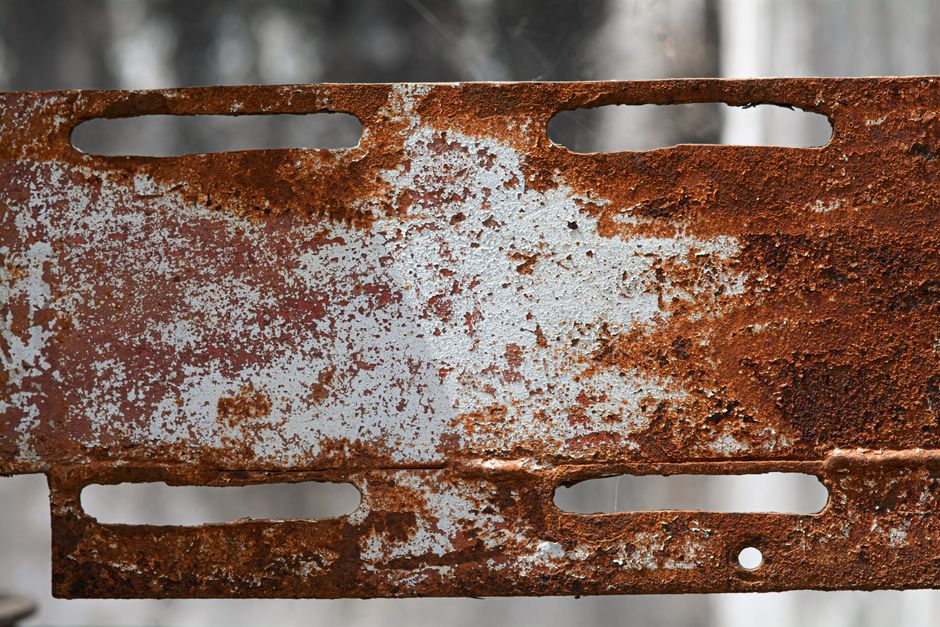
As a result, your system has to work twice as hard to cool your home in the summer or extract heat in the winter. In fact, coastal salt air can reduce HVAC system efficiency by up to 50% if the coils are not regularly maintained. Over time, this accelerated wear can lead to premature compressor failure, turning what should have been a 15-year asset into a costly early replacement.
The Impact of High Humidity on Indoor Air Quality
Our climate challenges aren't restricted to the outdoors. Indoor relative humidity in the Pacific Northwest frequently climbs above the EPA-recommended range of 30% to 50%. When indoor humidity exceeds 60%, your home becomes a breeding ground for mold, mildew, and dust mites.
This moisture often finds its way into your crawlspaces and attic, where uninsulated or leaky ductwork acts like a sponge. When warm, humid air in a crawlspace meets cold air conditioning ducts, condensation forms on the outside of the metal or flex-ducts. This dripping moisture damages floorboards and creates mold reservoirs that are eventually pulled into your living spaces.
By focusing on Home Energy Efficiency and proper duct sealing, you can prevent this moisture intrusion, protecting both your structural foundation and the air your family breathes.
The 7-Day Action Plan: Practical HVAC Maintenance Tips for the Kitsap Peninsula
To help you protect your investment, we have put together a straightforward, seven-day action plan. These are simple, highly effective homeowner tasks that you can perform between professional visits to optimize your system’s performance and longevity.
To illustrate why a specialized approach is necessary, consider how our local damp conditions compare to drier regions:
| Maintenance Task | Wet Marine Climate (Kitsap Peninsula) | Dry Continental Climate |
|---|---|---|
| Filter Replacement | Every 30–60 days (due to mold spores & wood smoke) | Every 90 days |
| Outdoor Coil Rinsing | Monthly (to wash away salt spray & organic debris) | Once or twice a year (mostly for dust) |
| Condensate Line Flushing | Every 3–6 months (high risk of algae/slime) | Annually |
| Outdoor Unit Clearance | Weekly checks (rapid moss, fern, and weed growth) | Monthly checks (tumbleweeds or sand) |
Days 1-3: Airflow and Filter Optimization
The first three days of our plan focus on the single most critical component of homeowner maintenance: ensuring unrestricted airflow. Your HVAC system is designed to move a specific volume of air. When that airflow is restricted, the system suffocates, leading to higher energy bills, frozen coils, and compressor strain.
Start by locating all return air registers in your home and ensuring they are not blocked by furniture, heavy drapes, or thick rugs. Next, inspect your air filter. While national guidelines often suggest changing filters every 90 days, the high humidity on the Kitsap Peninsula means filters can damp-clog much faster. Moisture in the air binds with dust, creating a thick barrier that blocks airflow.
We highly recommend upgrading to a MERV 8 to MERV 13 filter, which balances excellent allergen and particulate capture without putting excessive static pressure on your blower motor. During late summer, when regional wildfire smoke can clog a filter in a matter of days, you should check your filter weekly.
Understanding the Importance of Regular Air Filter Replacement is the easiest way to prevent unexpected breakdowns. If you have pets or suffer from seasonal allergies, establishing a routine for Regular Air Filter Replacement HVAC System is your first line of defense against poor indoor air quality.
Days 4-5: Outdoor Unit Clearance and Coil Rinsing
On Days 4 and 5, step outside to inspect your outdoor condenser or heat pump unit. Our lush, forested surroundings in areas like Gig Harbor, Seabeck, and Indianola mean our yards are filled with pine needles, wet leaves, moss, and aggressive ferns.
First, clear away any vegetation, weeds, or stored items to establish a minimum of two feet of clear space around the entire unit. This clearance is vital for proper heat exchange. If bushes or trees are crowding the unit, trim them back.
Next, inspect the metal fins on the sides of the unit. If you see dirt, salt crust, or organic debris, it is time for a gentle rinse. Grab your garden hose, set the nozzle to a gentle spray pattern (like "shower" or "cone"), and wash the coils from top to bottom.
Crucial Warning: Never use a pressure washer on your outdoor unit. The high-pressure stream will instantly bend the delicate aluminum fins, permanently blocking airflow and requiring tedious manual straightening.
If you live in Poulsbo, keeping this unit clean is a core part of regular AC Maintenance Poulsbo WA to combat the damp, salty Puget Sound winds.
Days 6-7: Condensate Drains and Vent Inspections
On the final two days of your maintenance week, turn your attention to the water your system removes from the air. Because our humidity is so high, an air conditioner or heat pump in cooling mode extracts gallons of water from your indoor air every day. This water drains into a plastic condensate pan and flows out of your home through a PVC drain line.
In a damp environment, this dark, wet pipe is a perfect incubator for algae, mold, and bacterial slime. If this slime builds up, it will clog the drain line, causing water to back up and overflow into your home, potentially damaging drywall, ceilings, or crawlspaces.
To prevent this, find your condensate drain access point (usually a T-shaped pipe near your indoor evaporator coil) and pour half a cup of distilled white vinegar down the line. The natural acidity of the vinegar kills any developing algae and keeps the pipe clear.
Finally, walk through your home and make sure all supply vents are open and clean. For more details on maintaining these critical components, check out our Essential Heat Pump Maintenance Tips.
How Often to Schedule Professional HVAC Maintenance in Kitsap County
While DIY tasks are fantastic for day-to-day efficiency, they cannot replace the trained eye and specialized tools of a professional technician. Because heat pumps on the Kitsap Peninsula operate year-round—providing cooling in the summer, dehumidification in the shoulder seasons, and heating in the winter—they endure double the wear and tear of a standard furnace or air conditioner.
For year-round heat pump systems, we recommend scheduling professional maintenance twice a year: once in the spring to prepare for summer cooling, and once in the fall to ensure your heating components are ready for the winter dampness. If you rely on a gas or electric furnace for heating and a standard AC for cooling, an annual visit for each system is sufficient.
To understand the full scope of what a professional visit covers, check out our guide on How Often Should You Service Your HVAC System. For a complete breakdown of the technical inspections performed during these visits, our How Often HVAC Service Complete Guide provides all the answers.
Seasonal Priorities for Heat Pumps and Furnaces
In our region, the transition from fall to winter brings a unique set of challenges. When temperatures hover around 45°F and it is raining steadily, your heat pump has to work incredibly hard. The moisture in the air condenses on the outdoor coils and, because the refrigerant inside is below freezing, that moisture quickly turns to frost.
To combat this, heat pumps periodically enter a "defrost cycle," which temporarily reverses the system to send warm refrigerant back to the outdoor unit to melt the ice. During this cycle, the system activates auxiliary electric heat strips to keep your home from getting cold.
A professional fall tune-up ensures that your reversing valve operates smoothly and that your auxiliary heat strips are functioning correctly. If you live in Poulsbo, you can refer to our Heat Pump Maintenance Poulsbo 24hr Guide to keep your system running perfectly through these damp winter transitions.
For homes in Silverdale that rely on combustion heating, our Furnace Maintenance Silverdale WA Guide outlines the vital safety checks, such as inspecting the heat exchanger for cracks that could leak carbon monoxide into your living spaces.
Why Annual HVAC Maintenance Is It Worth It for Coastal Homes
Many homeowners ask if regular professional maintenance is truly worth the investment. The short answer is yes. According to the Department of Energy, well-maintained heat pumps consume 20% to 25% less energy than neglected units. Furthermore, regular maintenance can save homeowners up to 30% on their monthly energy bills by ensuring every component is operating at peak efficiency.
Additionally, skipping professional service can have serious financial consequences beyond high utility bills. Almost all major HVAC manufacturers require documented annual professional maintenance to keep their equipment warranties valid. If a critical component like your compressor fails prematurely, the manufacturer may deny your warranty claim if you cannot prove the system was regularly serviced.
For a deeper dive into the return on investment of preventative care, read our article on Annual HVAC Maintenance Is It Worth It.
Warning Signs Your Kitsap HVAC System Needs Immediate Attention
Even with the best maintenance routines, mechanical systems can occasionally experience issues. Recognizing the early warning signs of trouble can help you address minor problems before they cascade into major, expensive failures.
- Musty or Damp Odors: If your vents are blowing air that smells like dirty socks, you likely have mold or mildew growing on your indoor evaporator coil or within your ductwork.
- Weak Airflow: If some rooms are warm while others are freezing, or if you can barely feel air coming out of your registers, your blower motor may be struggling, or your ductwork may have developed a major leak.
- Short-Cycling: If your heating or cooling system turns on, runs for a couple of minutes, and then shuts off abruptly, it is short-cycling. This is often caused by an overheating heat exchanger, a clogged filter, or a failing sensor.
- Unusual Noises: Squealing, banging, rattling, or grinding noises indicate that a belt has slipped, a fan blade is loose, or a motor bearing is failing.
If you notice any of these signs, it is time to turn off your system and call in a certified professional to prevent further damage.
Implementing Long-Term HVAC Maintenance Tips for the Kitsap Peninsula
Living in a wet marine climate means we must remain vigilant against rust and moisture accumulation. During professional visits, technicians will inspect your electrical contacts for signs of pitting or green copper corrosion, which is accelerated by salt air. They will also verify that your system's refrigerant charge is precise, as an undercharged system will run cold, causing the indoor coil to freeze and block airflow entirely.
If you are located in Silverdale, scheduling a regular Furnace Tune Up Silverdale WA is the best way to ensure your heating system remains safe and reliable. For those with hydronic heating systems in Poulsbo, our Boiler Maintenance Poulsbo WA Guide provides specialized advice for maintaining radiant warmth throughout the coldest months of the year.
Frequently Asked Questions about Coastal HVAC Care
How often should I change my air filters in the Pacific Northwest?
In the Pacific Northwest, we recommend checking your air filters every 30 days and replacing them at least every 60 days. This is more frequent than the standard 90-day recommendation used in drier, less humid states.
Our high outdoor humidity can make filter fibers damp, causing dust to cling and clog the filter faster. Additionally, our region experiences seasonal challenges like high spring pollen, pet dander, and late-summer wildfire smoke. During active wildfire events, you should check your filter weekly and replace it as soon as it begins to look grey or ash-covered to protect your indoor air quality.
Does salt air really damage my outdoor heat pump or AC unit?
Yes, salt air is highly corrosive to outdoor HVAC units. The salt-laden moisture carried inland by Puget Sound winds creates an electrochemical reaction called galvanic corrosion when it settles on the aluminum fins and copper tubing of your condenser coil. This corrosion reduces the metal's ability to transfer heat, which can lower your system's operating efficiency by up to 50%.
To protect your system, we recommend rinsing your outdoor unit monthly with a gentle garden hose to wash away salt deposits. If you are replacing a system on a waterfront property, ask about specialized marine-grade anti-corrosion coatings that are designed to withstand harsh coastal environments.
Why is my heat pump forming ice during damp winter days?
It is completely normal for a thin layer of frost to form on your heat pump's outdoor coils when outdoor temperatures drop below 45°F in wet weather. To melt this frost, your heat pump will automatically enter a defrost cycle, which temporarily warms the outdoor coils while using auxiliary heat strips to keep your home comfortable.
However, if your outdoor unit is completely encased in solid, thick ice, or if it remains frozen for hours, this indicates a problem. Common causes of excessive icing include restricted airflow from a dirty indoor filter, a failing defrost control board, a faulty reversing valve, or a low refrigerant charge. If you see solid ice buildup, you should turn off the system and contact a professional technician to prevent compressor damage.
Conclusion
Taking care of your heating and cooling system doesn't have to be overwhelming. By implementing this simple 7-day action plan and committing to regular, proactive care, you can enjoy lower utility bills, cleaner indoor air, and the peace of mind that comes with a highly reliable home comfort system.
At Eagle Pipe Mechanical, we are proud to be a 100% women-owned and operated business serving homeowners throughout Kitsap and Jefferson Counties. With over 45 years of experience, federal and state certifications, and EPA-certified technicians, we are dedicated to providing honest, efficient, and personable comfort solutions.
To make ongoing maintenance effortless, we offer our exclusive Eagle's Nest Maintenance Plan. This comprehensive program includes detailed 37-point inspections, extended warranties, priority customer status, and valuable discounts on repairs, helping you maximize your system's efficiency and lifespan.
Whether you need a seasonal tune-up, expert repairs, or a high-efficiency system upgrade, our team is here to help. For reliable service in Poulsbo, Kingston, Bainbridge Island, Silverdale, Bremerton, and beyond, explore our HVAC Service Poulsbo WA options or consult our HVAC Maintenance Poulsbo WA Guide.
Ready to protect your home’s comfort? Schedule professional service today with the trusted experts at Eagle Pipe Mechanical!
CUSTOMER TESTIMONIALS
Our customers’ experiences say more than we ever could. See how Eagle Pipe Heating & Air has earned trust across the Pacific Northwest with reliable service and lasting results.