
Why your oil furnace might be ghosting your bank account

Is Your Oil Furnace Quietly Draining Your Wallet?
An oil heat vs heat pump comparison is one of the smartest things a Kitsap or Jefferson County homeowner can do before their next heating season. If your oil furnace has been your home's workhorse for years, you might not realize how much more you could be spending compared to a modern heat pump alternative.
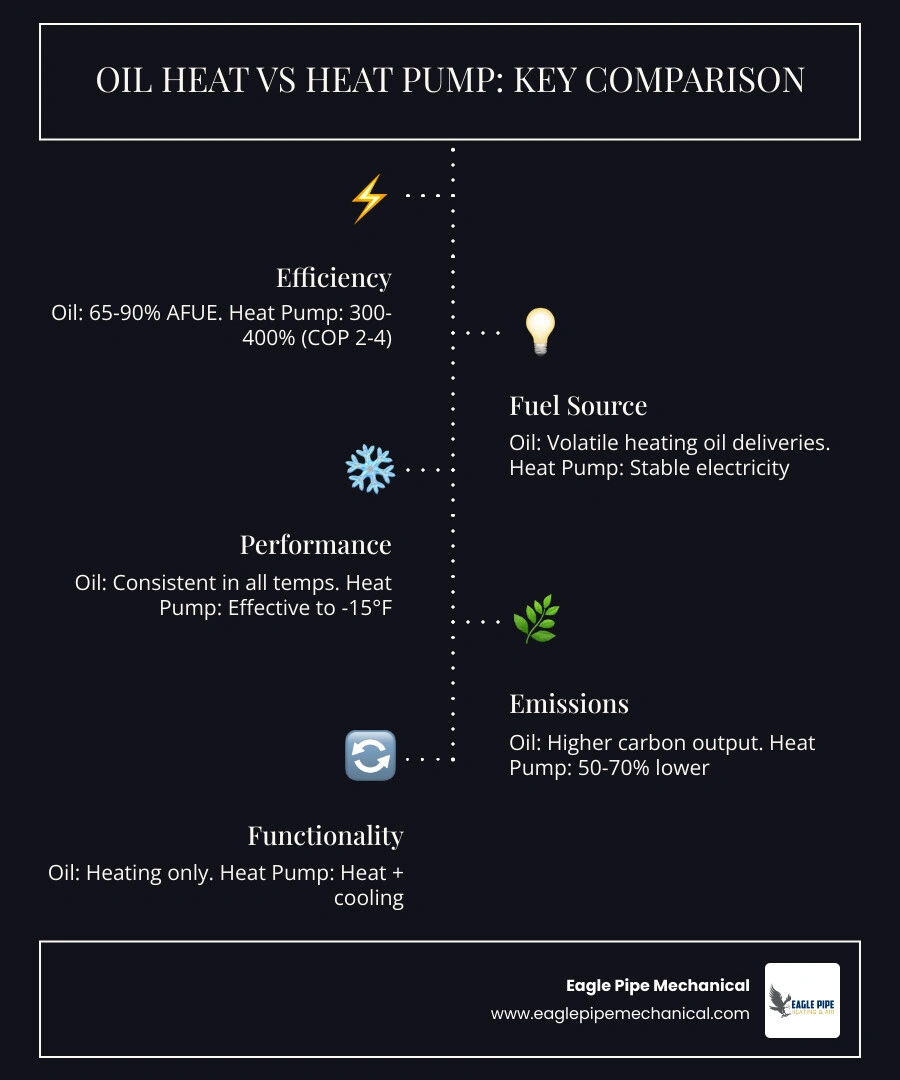
Here's a quick breakdown of how the two systems stack up:
| Factor | Oil Heat | Heat Pump |
|---|---|---|
| Efficiency | 65-90% AFUE | 300-400% (COP 2-4) |
| Fuel source | Heating oil delivery | Electricity |
| Heating & cooling | Heat only | Both |
| Cold weather performance | Consistent to any temp | Effective to -15°F |
| Carbon emissions | Higher | 50-70% lower |
| Fuel price stability | Volatile | More predictable |
| Dual functionality | No | Yes |
Heating accounts for up to 52% of a home's total energy use. That means the system sitting in your basement or utility room has an outsized impact on your monthly bills - and your long-term comfort.
Oil prices don't follow a predictable pattern. They respond to global events, supply chains, and seasonal demand. In early 2025, Northeast homeowners were paying between $3.73 and $3.92 per gallon, burning through 800 to 1,200 gallons in a single heating season. That kind of unpredictability makes budgeting genuinely difficult.
Heat pumps work differently - they don't burn anything. Instead, they move heat from outdoor air into your home, making them dramatically more efficient per unit of energy used. Modern cold-climate models maintain strong performance even during the kind of cold, damp winters common across Kitsap and Jefferson County.
This guide walks you through everything you need to know - efficiency, cold-weather performance, maintenance, environmental impact, and what the switch actually involves - so you can make a confident, informed decision for your home.
How Heat Pumps and Oil Furnaces Work
To understand the oil heat vs heat pump comparison, we first need to look at what is happening inside these machines. While both aim to keep your living room cozy during a Suquamish windstorm, they use completely different physical principles to get there.
The Oil Furnace: Heat Through Combustion
Oil heating systems have been a staple in American homes for nearly 200 years. The process is straightforward: combustion. Your system pulls heating oil from a large storage tank (typically holding around 300 gallons) and sends it to a burner assembly.
Inside the burner, the oil is atomized into a fine mist, ignited, and burned within a combustion chamber. This creates intense heat, which is then transferred to your home's air through a component called a heat exchanger. A blower fan then pushes that warmed air through your ductwork. It is a powerful, high-BTU process, but it requires a constant supply of delivered fuel and creates exhaust gases that must be vented through a chimney or flue.
The Heat Pump: Heat Through Transfer
A Heat Pump is essentially a reversible air conditioner. It doesn't create heat; it moves it. Even when it feels chilly outside in Port Townsend, there is still thermal energy present in the air.
Using a refrigerant cycle, the outdoor unit extracts that heat. The refrigerant absorbs the outdoor heat, evaporates into a gas, and is then compressed. This compression causes the temperature of the gas to spike. That hot gas is then sent to your indoor unit, where a fan blows air across the coils, transferring the heat into your home. In the summer, the process simply reverses to provide cooling. Because it is moving heat rather than burning fuel to create it, the system is incredibly efficient.
For many homeowners looking at an Oil To Electric transition, this "magic" of heat transfer is the biggest selling point.
Oil heat vs heat pump comparison: Efficiency and Performance
When we talk about efficiency in the HVAC world, we use two main metrics: AFUE and COP.
- AFUE (Annual Fuel Utilization Efficiency): This measures how much of your fuel is actually turned into heat for your home versus how much is lost up the chimney. Most modern oil furnaces sit between 80% and 90% AFUE.
- COP (Coefficient of Performance): This measures the ratio of heating provided to the electricity consumed. A COP of 3.0 means the system provides three units of heat for every one unit of electricity it uses.
In a head-to-head oil heat vs heat pump comparison, the heat pump is the clear winner on paper. While an oil furnace is technically "losing" 10-20% of its energy potential through exhaust, a heat pump can reach efficiency levels of 300% to 400%. This is because it isn't converting one form of energy into another; it's just paying a "transportation fee" (electricity) to move heat from point A to point B.
According to data from the U.S. Department of Energy, switching from heating oil to a high-efficiency heat pump can save homeowners between $923 and $2,822 a year in utility costs. In the Pacific Northwest, where electricity rates are often more stable than global oil prices, these savings can be even more pronounced over a 10-to-20-year period.
Understanding the oil heat vs heat pump comparison in cold weather
A common myth we hear in places like Silverdale and Bremerton is that heat pumps stop working when it gets cold. While that might have been true in the 1980s, modern cold-climate technology has changed the game.
Today’s cold-climate heat pumps are engineered to maintain high efficiency even when temperatures drop to -15°F. At 32°F, a heat pump might operate at 250% efficiency. Even in prolonged freezing conditions, it often maintains a COP of 2.0 or higher.
Oil furnaces, however, provide a consistent BTU output regardless of the outdoor temperature. They produce "hotter" air at the register (often 120°F+), which some homeowners prefer for that "toasty" feeling. However, for those who have already made an Oil To Gas Conversion or moved to electric, the steady, consistent warmth of a heat pump often feels more comfortable than the "blast and fade" cycle of a furnace.
Maintenance needs in an oil heat vs heat pump comparison
Maintenance is where the "ghosting your bank account" part really comes into play. Oil systems are inherently "dirty" because they involve combustion.
Oil Furnace Maintenance:
- Requires annual nozzle replacement and filter changes.
- The heat exchanger and chimney need regular inspections for soot buildup.
- Fuel tanks must be monitored for sludge and corrosion to prevent leaks.
- Failure to maintain an oil system can lead to "puff backs," where soot is blown throughout the house.
Heat Pump Maintenance:
- Requires regular filter changes (every 1-3 months).
- Outdoor coils need to be kept clear of debris and snow.
- Annual professional inspections focus on refrigerant levels and electrical connections.
While both systems require an annual tune-up to stay within warranty, the ongoing "hidden" costs of oil—fuel deliveries, tank insurance, and potential soil contamination risks—make the Oil To Electric path much simpler for the average homeowner.
Performance in the Pacific Northwest Climate
In Kitsap and Jefferson Counties, we don't just deal with cold; we deal with damp. Whether you're in a historic home in Port Townsend or a newer build in Poulsbo, the humidity of the Pacific Northwest plays a huge role in home comfort.
Oil furnaces tend to produce very dry heat. In the winter, this can lead to itchy skin, static electricity, and dry sinuses. Heat pumps, because they circulate air differently and don't involve a high-temperature combustion flame, often help maintain a slightly higher, more comfortable indoor humidity level.
Furthermore, our region's climate is actually the "sweet spot" for heat pump performance. We rarely see the sustained -20°F temperatures of the Midwest. Most of our winter days hover between 35°F and 45°F—the exact temperature range where heat pumps are at their peak efficiency.
For homeowners on Bainbridge Island or in Gig Harbor who are conscious of local energy standards, the ability to add air conditioning as a "free" bonus with a heat pump installation is a major advantage. As our summers get warmer, having a system that can handle both a damp January morning and a smoky August afternoon adds significant value to your home.
Long-Term Value and Environmental Impact
If you are looking at the next 15 to 20 years, the oil heat vs heat pump comparison leans heavily toward electrification.
The Carbon Footprint
Heating oil is a carbon-intensive fuel. Burning one gallon of heating oil produces about 22.4 pounds of CO2. When you multiply that by the 800-1,200 gallons a typical Northeast or Northwest home might use, the environmental impact is staggering.
In contrast, heat pumps produce 50-70% fewer carbon emissions. In Washington State, our electricity grid is increasingly powered by renewable sources like hydro, wind, and solar. This means that as the grid gets cleaner, your home heating automatically gets cleaner, too.
Property Value and Risks
An old oil tank is often seen as a liability during a home sale. Underground tanks, in particular, carry the risk of leaks that can lead to incredibly expensive soil remediation. By switching to a heat pump, you eliminate the need for fuel storage entirely.
According to research on Heat Pumps vs. Heating Oil: Making the Cost-Effective Choice , homes with modern, efficient HVAC systems often see an increase in property value. Buyers in 2026 are looking for "turn-key" homes with low operating costs and no hidden environmental risks.
Making the Switch: Incentives and Considerations
Ready to stop the "bank account ghosting"? Moving away from oil is a big project, but there has never been a better time to do it.
- Incentives and Rebates: Under current federal guidelines, homeowners can access tax credits up to $2,000 for heat pump installations. Local utility programs in Kitsap and Jefferson County often offer additional rebates to encourage the move away from fossil fuels.
- Electrical Upgrades: Because heat pumps run on electricity, some older homes in Kingston or Hansville may need an electrical panel upgrade to 200-amp service. This is a one-time investment that also prepares your home for EV charging.
- Hybrid Options: If you live in an area with extreme micro-climates, you might consider a hybrid system. This uses a heat pump for 90% of the year and keeps a small furnace (often propane or gas) as a backup for those rare days when the temperature drops below the heat pump's optimal range.
- Professional Sizing: It is vital to have a professional perform a "Manual J" load calculation. This ensures your new system is perfectly sized for your home's square footage and insulation levels.
We also offer financing through Synchrony to help make these upgrades more accessible, allowing you to pay for the system using the money you're no longer spending on oil deliveries.
Frequently Asked Questions about Heating Conversions
Can a heat pump really handle Washington winters?
Absolutely. Modern "cold-climate" heat pumps are designed specifically for regions like ours. While older models struggled near freezing, today's units can provide reliable heat well below zero. In the rare event of an extreme cold snap, most systems include supplemental electric heat strips to ensure you stay warm no matter what.
What is the typical payback period for switching from oil?
While it varies based on your home’s insulation and previous oil usage, many homeowners see a "break-even" point within 5 to 10 years. When you factor in the avoided costs of oil tank maintenance, chimney cleanings, and the added value of air conditioning, the ROI is often much faster than people expect.
Is it safer to use electricity or heating oil?
Electricity is generally considered safer for home heating. Oil systems involve the storage of flammable liquid and the combustion of fuel, which carries a risk of carbon monoxide leaks if the system isn't vented properly. Removing the combustion process from your home improves indoor air quality and eliminates the risk of fuel leaks or spills.
Conclusion
At Eagle Pipe Mechanical, we’ve spent over 45 years helping our neighbors in Poulsbo, Silverdale, and beyond find the right balance between comfort and cost. As a 100% women-owned and operated business, we take pride in offering personable, honest solutions that actually make sense for your specific home.
Whether you are looking for an Oil To Electric conversion or simply want to learn more about our Eagle’s Nest maintenance plan, our NATE-certified team is here to help. We don't just install equipment; we help you build a more efficient, comfortable, and sustainable future for your family.
Don't let your old furnace continue to ghost your bank account. If you’re in Kitsap or Jefferson County, give us a call to discuss how a modern heat pump can transform your home comfort.
CUSTOMER TESTIMONIALS
Our customers’ experiences say more than we ever could. See how Eagle Pipe Heating & Air has earned trust across the Pacific Northwest with reliable service and lasting results.