Beginner's Guide to Heat Pump Benefits for the Pacific Northwest

Why Heat Pump Benefits for the Pacific Northwest Matter for Your Home
The heat pump benefits for the Pacific Northwest are hard to ignore — especially if you're heating and cooling a home in Kitsap or Jefferson County. Winters here are mild and wet. Summers are getting hotter. And most homes are still running older systems that weren't built for either challenge.
Here's a quick look at what makes heat pumps such a strong fit for this region:
| Benefit | Why It Matters in the PNW |
|---|---|
| High efficiency (COP 2.0–4.0) | Mild winters keep heat pumps in their peak operating range most of the year |
| Dual heating and cooling | One system handles both — no separate AC unit needed |
| Up to 50% energy savings | Compared to electric resistance heating like baseboards or furnaces |
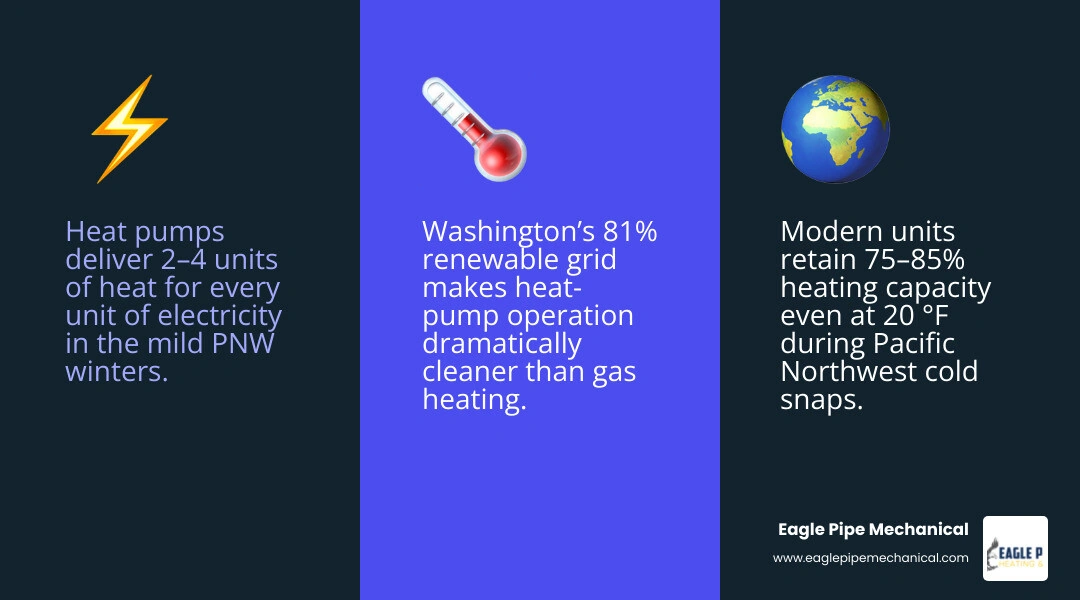
| Works in cold snaps | Modern cold-climate units retain 75–85% capacity at 20°F |
| Cleaner operation | Washington's grid is roughly 81% renewable, so electric heat pumps run much cleaner than gas |
| Long lifespan | With regular maintenance, expect 15–20 years of reliable service |
| Improved indoor air quality | No combustion means no onsite carbon monoxide risk and better air circulation |
Think about what happened during the 2021 heat dome — Portland hit 105°F and Seattle reached 94°F. Many homeowners without air conditioning ended up staying with relatives or in hotels. A heat pump would have handled both that summer and every winter since, from a single system.
The Pacific Northwest's marine climate — mild, damp, and rarely extreme — is genuinely well-suited to how heat pumps work. They move heat rather than generate it, which means they don't have to work nearly as hard as they would in harsher climates. More than a quarter of PNW homes already use them, and the number keeps climbing.
In this guide, Eagle Pipe Mechanical walks you through everything you need to know — from how these systems perform in our local weather to which type fits your home, what incentives are available, and how to keep your system running efficiently for years.
Essential heat pump benefits for the pacific northwest terms:
Why Heat Pump Benefits for the Pacific Northwest Are Unmatched
When we talk about the maritime climate of Kitsap and Jefferson Counties, we are talking about a very specific weather pattern. From the breezy shores of Bainbridge Island and Port Townsend to the wooded neighborhoods of Silverdale and Poulsbo, our weather is characterized by high humidity, lots of "liquid sunshine" (drizzle), and moderate temperatures that hover between 35°F and 75°F for most of the year.
This specific climate zone is the absolute "sweet spot" for heat pump technology. To understand why, it helps to understand how does a heat pump work. Traditional systems like gas furnaces or electric baseboard heaters create heat by burning fuel or running electricity through high-resistance coils. A heat pump, on the other hand, acts like a two-way heat transporter. It uses a refrigerant cycle to absorb thermal energy from the outdoor air and move it indoors during the winter. In the summer, it reverses the process, pulling heat out of your home and dumping it outside.
Because it is moving heat rather than creating it from scratch, a heat pump can deliver up to three to five times more heat energy than the electricity it consumes. Our mild local temperatures mean there is always an abundance of ambient heat in the outdoor air, allowing the system to operate at peak efficiency for nearly the entire heating season.
Maximizing Heat Pump Benefits for the Pacific Northwest in Winter
Our winters are notoriously damp, and while we do not experience the prolonged sub-zero freezes of the East Coast, the high humidity can make 40°F feel bone-chillingly cold. Fortunately, damp air actually contains a surprising amount of latent heat.
As the heat pump extracts this latent heat from our moist winter air, condensation naturally forms on the outdoor unit's coils. In freezing temperatures, this moisture can turn to frost. This is where the system's automatic defrost cycle comes into play. The heat pump will temporarily reverse itself for a few minutes to warm up the outdoor coils, melt the ice, and then smoothly transition back to heating your home.
This smart, self-regulating operation is why heat pumps maintain highly efficient performance throughout our damp winters. Embracing this clean technology is also key to regional sustainability goals, as highlighted in the regional policy discussion on How Cascadia Can Maintain Its Heat Pump Momentum.
Utilizing Heat Pump Benefits for the Pacific Northwest for Summer Cooling
Historically, air conditioning was considered a luxury in Kitsap and Jefferson Counties. Many of our classic homes in places like Port Orchard, Bremerton, and Kingston were built without cooling systems. However, June 2026 climate realities show that our summers are growing hotter, with longer and more frequent heat waves.
Choosing a heat pump solves two problems at once. You do not need to purchase and maintain a separate furnace and air conditioner; the same outdoor unit that keeps you cozy in January will keep you cool and refreshed in July.
Additionally, because heat pumps are designed to dehumidify as they cool, they pull excess moisture out of your indoor air during our sticky summer days. This prevents that heavy, "clammy" indoor feeling. To learn how to get the most out of your system when temperatures spike, check out our guide on How to Use Your Heat Pump for Summer Cooling.
How Modern Cold-Climate Heat Pumps Handle PNW Freezing Temperatures
A common concern among local homeowners is whether a heat pump can handle those sudden, freezing cold snaps that occasionally sweep through Western Washington. We have all experienced those rare winter weeks when the wind howls off the water and temperatures drop into the 20s or teens.
Older heat pumps did struggle in extreme cold, often requiring backup electrical resistance heat strips to kick in and assist. However, modern cold-climate heat pumps (CCHPs) represent a massive technological leap forward.
Today's cold-climate units are specifically designed to operate efficiently at temperatures well below freezing—even down to -15°F in some advanced models. Research shows that these units easily retain 75% to 85% of their rated heating capacity at 20°F. Because our local cold snaps rarely drop below 20°F, a properly sized modern system has more than enough headroom to keep your home perfectly warm without breaking a sweat or relying on expensive backup heat.
The Role of Variable-Speed Technology
The secret weapon behind this cold-weather performance is variable-speed inverter technology. Traditional single-stage heating systems operate like a light switch: they are either 100% on or completely off. This leads to annoying temperature swings, loud blasts of air, and high energy usage as the system constantly cycles on and off.
Variable-speed compressors work more like a dimmer switch. They continuously adjust their output in tiny increments to match the exact heating or cooling load of your home. On a mild 45°F November day in Gig Harbor, the compressor might run quietly at just 25% capacity to maintain a steady temperature. When a cold snap hits, it ramps up smoothly to meet the demand. This continuous, low-speed operation is incredibly quiet, keeps your indoor temperature rock-steady, and uses a fraction of the energy consumed by traditional systems.
Energy Efficiency and System Types for Western Washington Homes
When you upgrade to a heat pump, you are making an investment that pays dividends on your monthly utility bills. According to regional research, homeowners switching from electric resistance zonal heating (like baseboards or wall heaters) or older electric furnaces see heating energy savings of 30% to 60% annually.
This efficiency advantage is clearly illustrated when comparing the Coefficient of Performance (COP) of different heating methods. COP is a simple ratio of energy output to energy input. For example, a standard electric baseboard heater has a COP of 1.0, meaning it delivers exactly 1 unit of heat for every 1 unit of electricity it consumes (100% efficiency). A high-efficiency gas furnace has a COP of around 0.80 to 0.95.
A modern heat pump, however, operates at a COP of 2.0 to 4.0. That means you get 2 to 4 units of heat for every single unit of electricity used—an effective efficiency rate of 200% to 400%! This incredible performance is why communities throughout our region are making the switch, as documented in Heat Pumps Can Save Money: Pacific Northwest Islands Show the Way.
Comparing Efficiency to Traditional Heating
To see how these systems stack up side-by-side, take a look at the typical efficiency and operational characteristics below:
| Heating System Type | Fuel Source | Typical Efficiency (COP / AFUE) | Heat Delivery Style |
|---|---|---|---|
| Modern Heat Pump | Electricity | 2.0–4.0 COP (200%–400% efficient) | Steady, gentle, continuous warm air |
| Electric Baseboards | Electricity | 1.0 COP (100% efficient) | Zonal, radiant heat (often dry and uneven) |
| Electric Furnace | Electricity | 1.0 COP (100% efficient) | High-velocity hot air blasts |
| Standard Gas Furnace | Natural Gas / Propane | 80%–95% AFUE (80%–95% efficient) | Intermittent blasts of high-temperature air |
To explore how these dynamics play out in detail when compared to fossil-fuel options, read our analysis of heat pump advantages over gas furnaces.
Ducted Heat Pumps
If your home in Bainbridge Island, Poulsbo, or Port Orchard already has a central ductwork system in place (perhaps from an older gas furnace or central AC), a ducted heat pump is often the most straightforward upgrade.
We can replace your existing outdoor AC or furnace with a high-efficiency central heat pump that utilizes your current ducts to distribute conditioned air evenly to every room. However, because heat pumps require proper airflow to operate efficiently, it is crucial to have your ductwork inspected during installation. In a typical Northwest house, up to 30% of the heated air moving through ducts can be lost due to leaks, gaps, or poor insulation before it ever reaches your living spaces.
If you are located on Bainbridge Island, you can learn more about central ducted options and professional local support through our dedicated Heat Pump Service Bainbridge Island page.
Ductless Mini-Splits
Many older homes in our historic coastal towns—such as Port Townsend, Bremerton, and Hansville—rely on electric baseboards, wall heaters, or wood stoves, and completely lack ductwork. Installing custom ducts in these properties can be highly invasive and expensive.
This is where ductless mini-split systems shine. A mini-split consists of a small outdoor compressor connected to one or more indoor air-handling units mounted on your walls or ceilings. The connection requires only a small three-inch hole through the exterior wall for refrigerant lines and electrical wiring.
Ductless mini-splits offer incredible zoning flexibility, allowing you to control the temperature of each room individually. If you want your bedroom cool but your living room cozy, you can adjust them independently. Best of all, because there are no ducts to leak, mini-splits are incredibly efficient. Pilot studies conducted in the Pacific Northwest show that installing a small ductless heat pump system can reduce a home's overall space heating energy consumption by an average of 44%.
For a detailed look at how to approach this upgrade in Kitsap County, check out our Heat Pump Replacement Poulsbo WA Guide.
Hybrid Dual-Fuel Systems
For some larger or older homes, a hybrid (or "dual-fuel") system offers the best of both worlds. This setup pairs an electric heat pump with a high-efficiency gas or propane furnace.
For 90% of the year, the heat pump handles all the heating and cooling at maximum efficiency. However, if an extreme cold snap hits and temperatures drop significantly, the system automatically switches over to the gas furnace to provide a boost of high-temperature heat. This configuration ensures absolute peace of mind and reliable comfort regardless of how wild our Western Washington winter weather gets.
Financial Incentives, Rebates, and Tax Credits in Washington State
Upgrading your home comfort system is a significant step, but the financial landscape in June 2026 makes it more affordable than ever. Thanks to federal, state, and local utility programs, you can stack multiple incentives to dramatically lower your net investment.
At the federal level, the Energy Efficient Home Improvement Credit (Section 25C) allows homeowners to claim a tax credit of 30% of the total project cost for qualifying heat pump installations, up to a maximum of $2,000 per year.
To help you navigate these financial opportunities and plan your project, we have compiled a comprehensive Heat Pump Installation Guide 2025 which outlines the qualifying efficiency standards and installation best practices.
Local Utility Programs
In addition to federal tax credits, local utilities serving Kitsap and Jefferson Counties offer generous rebate programs to encourage energy conservation:
- Puget Sound Energy (PSE): Homeowners in Poulsbo, Silverdale, Bremerton, Port Orchard, and surrounding areas can access rebates ranging from hundreds to thousands of dollars when upgrading from electric resistance heat (baseboards or electric furnaces) to a qualifying ducted or ductless heat pump.
- Jefferson County PUD: Residents in Port Townsend, Port Ludlow, Port Hadlock, and other Jefferson County communities can take advantage of robust rebate incentives designed to lower the upfront cost of energy-efficient heating and cooling upgrades.
Because we are dedicated to helping our clients optimize energy efficiency, we are happy to help you verify which utility rebates apply to your specific project and guide you through the paperwork.
Maximizing Performance: Installation, Maintenance, and Indoor Comfort
To fully realize the heat pump benefits for the Pacific Northwest, proper installation and ongoing care are essential. Unlike traditional systems that simply blast hot air, heat pumps rely on precise airflow and refrigerant charges to work their magic.
Proper Sizing and Professional Installation
A successful heat pump project starts long before the first bolt is turned. It begins with an accurate home assessment. We do not rely on rough square-footage estimates to size your system. Instead, we perform a detailed Manual J load calculation. This calculation takes into account your home's layout, orientation, window types, local microclimate, and existing insulation levels.
If a heat pump is oversized, it will "short-cycle," turning on and off rapidly. This wastes energy, wears out the compressor prematurely, and fails to properly dehumidify your home. If it is undersized, it will struggle to keep up on cold winter nights. Getting the sizing exactly right ensures maximum comfort and efficiency.
To learn more about the steps involved in professional system design and calibration, read our Heat Pump Tune Up Poulsbo Guide.
Environmental Impact and Carbon Emissions
For environmentally conscious homeowners in Western Washington, heat pumps represent the single most impactful upgrade you can make to reduce your household's carbon footprint.
Buildings account for roughly one-fifth of Washington State's greenhouse gas emissions, primarily due to burning fossil fuels like natural gas, heating oil, or propane for space heating. Because Washington's electrical grid is approximately 81% renewable—powered largely by clean, carbon-free hydroelectricity—switching to an electric heat pump virtually eliminates your home's heating-related carbon emissions overnight. It is a powerful way to keep our local communities clean, green, and beautiful for generations to come.
Frequently Asked Questions About PNW Heat Pumps
We hear many of the same questions from homeowners across Kitsap and Jefferson Counties. Here are the facts behind some of the most common regional heat pump questions.
Do heat pumps work during freezing Washington winters?
Yes, absolutely. Modern cold-climate heat pumps are engineered to extract heat from the outdoor air even when temperatures drop well below freezing. For our typical winter days in the 30s and 40s, they operate at peak efficiency. During rare, extreme cold snaps, CCHPs continue to perform reliably. If your home has unique heating demands or poor insulation, we can integrate auxiliary electric heat strips or design a hybrid dual-fuel system to ensure you are never left in the cold.
Will a heat pump make my house feel dry or clammy?
No. Unlike traditional gas furnaces, which can dry out your indoor air aggressively during the winter, heat pumps provide a more consistent, gentle warmth that maintains comfortable natural humidity levels. In the summer, the system acts as an air conditioner, actively pulling excess humidity out of the air to prevent your home from feeling damp or clammy. The result is balanced, year-round indoor comfort.
How long does a heat pump typically last in our maritime climate?
With regular professional maintenance, a high-quality heat pump in Kitsap or Jefferson County typically lasts 15 to 20 years. Because our marine climate is relatively mild, our systems do not experience the extreme "thermal shock" of regions with scorching summers and sub-zero winters. This moderate workload helps preserve the compressor and other vital components.
To keep your system running beautifully throughout its lifespan, we recommend simple homeowner habits like checking air filters every 60 to 90 days and keeping the outdoor unit clear of leaves, pine needles, and snow. For complete peace of mind, we invite you to explore our professional maintenance resources:
Conclusion
Upgrading to a heat pump is one of the smartest decisions you can make for your Pacific Northwest home. From slashing your heating bills by up to 50% to gaining whisper-quiet summer cooling and shrinking your carbon footprint, the advantages are clear and lasting.
At Eagle Pipe Mechanical, we are proud to be a 100% women-owned and operated HVAC and plumbing contractor with over 45 years of experience. Serving Kitsap and Jefferson Counties—including Poulsbo, Bainbridge Island, Silverdale, Port Townsend, Port Orchard, Bremerton, Kingston, and surrounding communities—we are committed to providing honest, knowledgeable, and efficient service.
We hold federal and state certifications, EPA and NATE certifications, and we prioritize personable, customized solutions that fit your family's unique needs and budget. To make your upgrade as seamless as possible, we also offer flexible financing options through Synchrony.
Are you ready to experience the comfort and savings of a modern heat pump system? Contact us today to schedule your home comfort assessment with the friendly team at Eagle Pipe Mechanical.
CUSTOMER TESTIMONIALS
Our customers’ experiences say more than we ever could. See how Eagle Pipe Heating & Air has earned trust across the Pacific Northwest with reliable service and lasting results.